Sulap Gerbong Tua, Binusian Tembus 5 Besar KAI Ideation Challenge
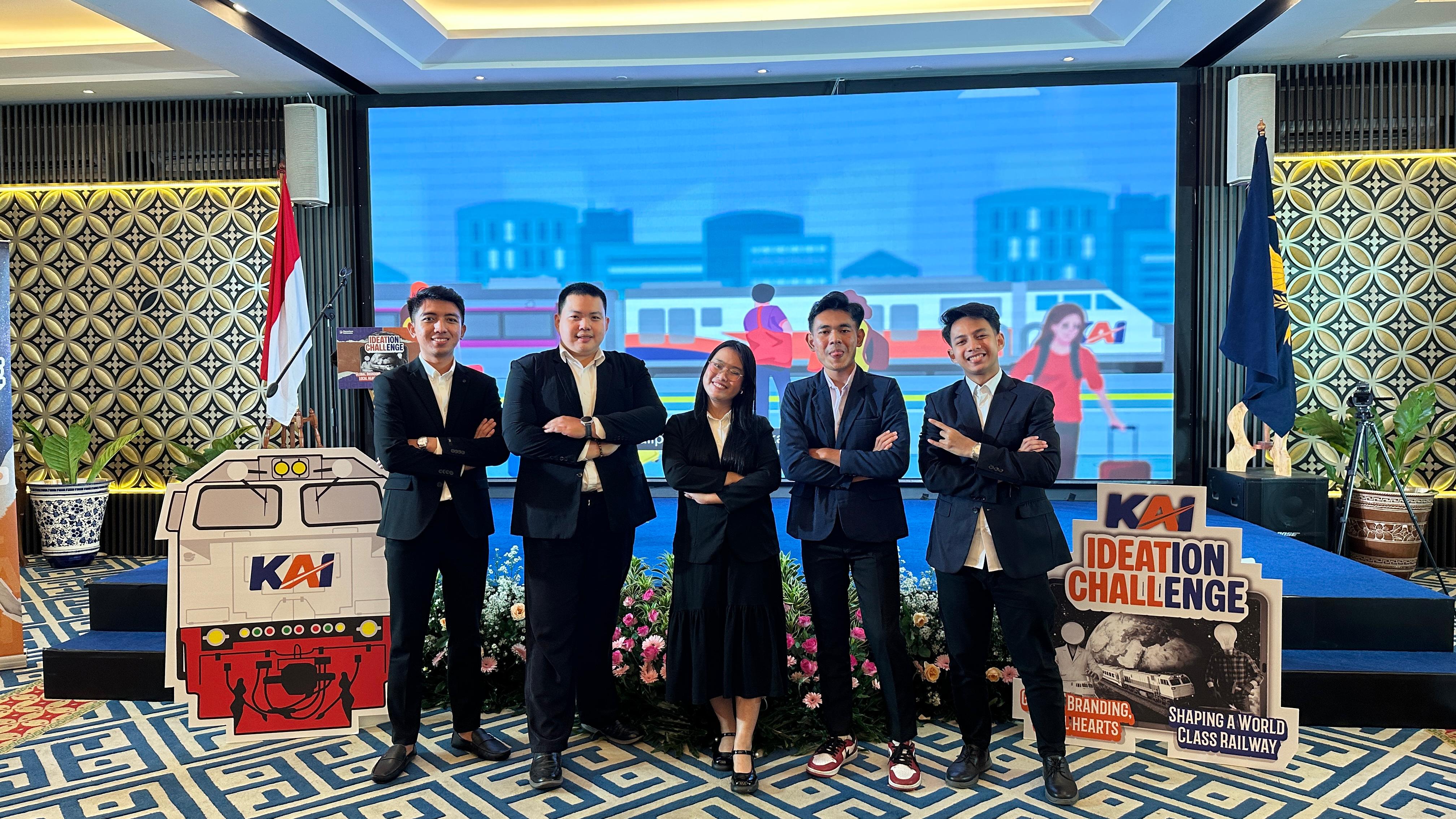
Berawal dari rasa iseng dan tenggat waktu yang sangat sempit, sekelompok mahasiswa lintas kampus berhasil melangkah jauh di ajang nasional bergengsi, yaitu KAI Ideation Challenge. Kelompok Gerbong Citra Global (GCG) dari program Master of Management (MM) Innovation & Entrepreneurship BINUS @Alam Sutera membuktikan bahwa ide yang relevan, tim yang solid, dan keberanian mencoba bisa membawa mereka ke posisi 5 besar dalam babak final. Semuanya bermuara dari semangat belajar dan praktik nyata ala BINUS Business School.
Mengenal KAI Ideation Challenge
KAI Ideation Challenge merupakan kompetisi business case hasil kolaborasi antara PT Kereta Api Indonesia dan Marketeers. Ajang ini membuka ruang bagi masyarakat Indonesia, termasuk diaspora di luar negeri, untuk menyumbangkan ide inovatif demi kemajuan industri perkeretaapian.
Peserta diwajibkan membentuk tim beranggotakan 2-8 orang. Setiap tim harus menyusun proposal komprehensif berisi latar belakang masalah, gagasan inovasi, serta alasan relevansi ide tersebut bagi PT KAI. Dari ratusan proposal nasional, hanya 10 tim terbaik yang lolos ke tahap berikutnya, dan GCG dari BINUS Business School adalah salah satunya.
Lika-liku Terbentuknya GCG
Gerbong Citra Global lahir dari situasi yang jauh dari kata ideal. Daniel Hadi Putra, mahasiswa S2 MM Innovation & Entrepreneurship BINUS Business School, pertama kali melihat informasi lomba ini lewat media sosial Marketeers. Pada saat itu, ia hanya punya waktu sekitar 10 hari hingga pendaftaran ditutup.
Di tengah persiapan sidang tesis, Daniel mengajak Candra Alifian Taligar, rekan satu tim tesisnya. Mereka lalu menghubungi Shafira Suryawardani, yang dikenal aktif sebagai mentor lomba bisnis. Dari situ, tim GCG semakin berkembang dengan menggandeng Muhammad Fakhrudin Zukhri dari ITS dan Satriyo Imam Arifin Wahono dari UNESA.
Meski berasal dari kampus berbeda, mereka sama-sama berani mencoba, bahkan dengan peluang keberhasilan yang kecil, serta siap bekerja dengan gesit.
Nama GCG sendiri terinspirasi dari istilah Good Corporate Governance, tapi dengan makna yang lebih luas. Bagi mereka, gerbong adalah simbol pergerakan, dan citra global mewakili mimpi mereka untuk mengharumkan nama Indonesia ke level internasional tanpa meninggalkan kearifan lokal. Konsep inilah yang kemudian menjadi benang merah seluruh ide mereka.
Dari Observasi Lapangan ke Ide Nyata
Tim GCG memulai perjalanan mereka dari observasi sederhana. Suatu hari, Daniel sempat datang langsung ke Stasiun Gambir untuk melihat potensi masalah dan peluang. Pada kunjungan tersebut, ia melihat banyaknya gerbong kereta lama yang terbengkalai begitu saja. Dari sana, ia jadi bertanya-tanya, “Kenapa tidak dimaksimalkan?”
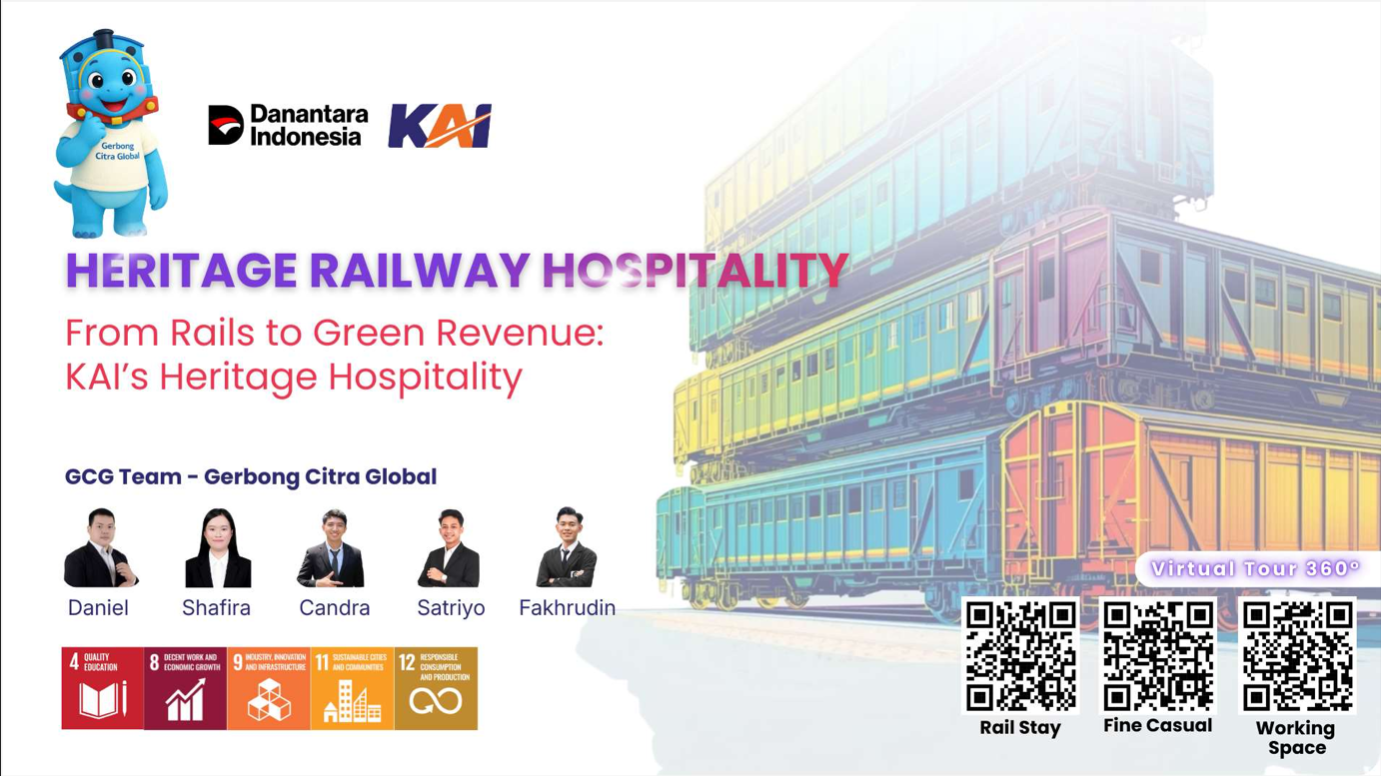
Daniel pun menyampaikan hasil observasi tersebut, dan berbekal latar belakang arsitektur yang dimiliki Candra, ide pun berkembang cepat. Sehingga, lahirlah ide optimalisasi gerbong bekas menjadi ruang bernilai ekonomi dengan pendekatan local heart, global branding.
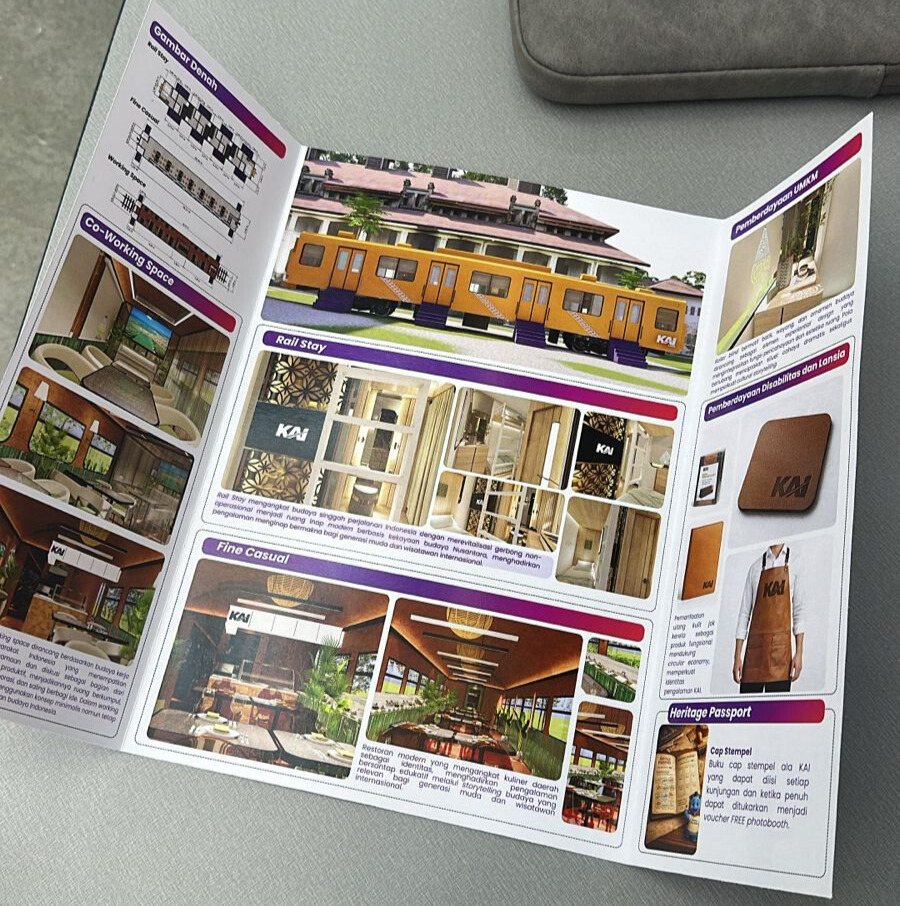
GCG menerapkan konsep penginapan berukuran compact di dalam gerbong kereta yang terinspirasi dari konsep hotel kapsul modern. Tata letak ruangannya efisien, tapi interiornya tetap nyaman dan luas. Desain bagian dalamnya pun mengangkat unsur budaya lokal seperti motif wayang, sehingga tamu bisa merasakan pengalaman khas Indonesia.
Untuk melengkapi pengalaman menginap tersebut, GCG menghadirkan konsep fine casual dining. Bukan restoran mewah, melainkan versi lebih terjangkau yang menyajikan kuliner tradisional seperti lemper, getuk, dan roti gambang dengan kemasan modern. Setiap menu dilengkapi QR code berisi cerita sejarah makanan tersebut.
Lalu, memahami populernya tren WFC (work from cafe), GCG juga merancang ruangan co-working space berbasis gerbong sebagai area kolaboratif anak muda. Co-working space ini dilengkapi dengan ruang privat dan area diskusi terbuka.
Lembur, Prototype, dan VR dalam Sehari
Tantangan terbesar tim GCG adalah waktu dan data yang terbatas. Dari pengumuman lolos Top 10 hingga pitching semifinal, mereka hanya punya waktu sekitar satu hari untuk menyiapkan pitch deck.
Candra bahkan harus membuat tiga prototype lengkap dalam waktu kurang dari 24 jam, mulai dari modeling, rendering, hingga visual kerja. Sebab, mereka harus menampilkan prototype dalam bentuk VR agar para juri bisa membayangkan pengalaman ruang secara nyata. Alhasil, semua anggota pun harus lembur. Ada yang fokus ke perencanaan keuangan, ada yang menyusun narasi bisnis, dan ada yang mengatur presentasi.
Namun, selama proses tersebut, tim GCG merasa bahwa ilmu yang didapat dari ruang kelas BINUS Business School sangatlah membantu. Terutama, untuk penerapan feasibility, sustainability, dan kehati-hatian finansial.
Berkat perjuangan keras, GCG akhirnya melaju hingga babak final yang digelar langsung di kantor pusat KAI di kawasan Juanda. Dari ratusan tim nasional, mereka berhasil menembus Top 5 finalis, dan ini merupakan sebuah pencapaian besar untuk tim yang awalnya hanya coba-coba. Meski tidak memenangkan gelar juara utama, mereka tetap pulang membawa kenangan indah.
English Version :
Transforming Old Train Carriages, BINUSIAN Break into the Top 5 of the KAI Ideation Challenge
What began as a spontaneous idea with an extremely tight deadline led a cross-campus student team to go far in a prestigious national competition, the KAI Ideation Challenge. The Gerbong Citra Global (GCG) team from the MM Innovation & Entrepreneurship program at BINUS @ Alam Sutera proved that relevant ideas, strong teamwork, and the courage to try can take a team into the Top 5 finalists.
All of this stemmed from a spirit of learning and hands-on practice that characterizes BINUS Business School and is highly relevant to MBA and Master of Management learning environments.
Getting to Know the KAI Ideation Challenge
The KAI Ideation Challenge is a business case competition organized by PT Kereta Api Indonesia (KAI) and Marketeers. This competition opens opportunities for Indonesians, including those in the diaspora, to contribute innovative ideas to advance the national railway industry.
Participants are required to form teams of 2-8 members. Each team must prepare a comprehensive proposal outlining the problem background, the proposed innovation, and the relevance of the idea to PT KAI. From hundreds of proposals submitted nationwide, only 10 teams advanced to the next stage, and GCG from BINUS Business School was one of them.
The Twists and Turns Behind the Formation of GCG
Gerbong Citra Global was formed under far from ideal conditions. Daniel Hadi Putra, a graduate student in the MM Innovation & Entrepreneurship program at BINUS Business School, first learned about the competition through Marketeers’ social media. At that time, there were only about 10 days left before the registration deadline.
While preparing for his thesis defense, Daniel invited his thesis teammate, Candra Alifian Taligar, to join him. They then reached out to Shafira Suryawardani, who was known for her active role as a business competition mentor. From there, the GCG team continued to grow by involving Muhammad Fakhrudin Zukhri from ITS and Satriyo Imam Arifin Wahono from UNESA.
Despite coming from different universities, they shared the same willingness to take risks, even with slim chances of success, and were ready to work quickly and efficiently.
The name GCG itself was inspired by the term Good Corporate Governance, but with a broader meaning. For the team, “gerbong” (railcar) symbolizes movement, while “global image” represents their dream of bringing Indonesia’s name to the international stage without abandoning local wisdom. This concept later became the common thread connecting all of their ideas.
From Field Observation to a Tangible Idea
The GCG team began their journey with simple observation. One day, Daniel visited Gambir Station to observe potential problems and opportunities directly. During the visit, he noticed many old railcars had been left unused. That sight sparked a simple question: “Why not optimize them?”
Daniel shared this observation with the team, and with Candra’s background in architecture, the idea quickly evolved. It led to the concept of optimizing retired railcars into economically valuable spaces using a local heart, global branding approach.
GCG proposed compact accommodation units inside railcars, inspired by modern capsule hotel concepts. The spatial layout is efficient, yet the interior remains comfortable and spacious. The interior design highlights local cultural elements such as wayang motifs, allowing guests to experience a distinctively Indonesian atmosphere.
To complement the accommodation experience, GCG introduced a fine-casual dining concept. Not a luxury restaurant, but a more affordable option serving traditional dishes like lemper, getuk, and roti gambang, with modern packaging. Each menu item is accompanied by a QR code that links to the dish’s historical story.
Recognizing the growing popularity of the WFC (work from cafe) trend, GCG also designed a railcar-based co-working space as a collaborative hub for young people. This co-working space includes private rooms and open discussion areas.
Overtime, Prototypes, and VR in a Single Day
The biggest challenge faced by the GCG team was limited time and data. From the announcement of their Top 10 qualification to the semifinal pitching session, they had only about one day to prepare their pitch deck.
Candra even had to create three complete prototypes in less than 24 hours, covering modeling, rendering, and functional visuals. The team needed to present the prototypes in VR format so that the judges could realistically envision the spatial experience. As a result, all team members worked overnight. Some focused on financial planning, others on business storytelling, and the rest on presentation flow.
Throughout this intensive process, the GCG team found the knowledge gained in BINUS Business School classrooms extremely helpful, particularly in applying feasibility analysis, sustainability considerations, and financial prudence, which were key competencies also emphasized in MBA, Master of Management, and MM programs.
—
Thanks to their hard work, GCG advanced to the final round held at KAI’s headquarters in the Juanda area. Out of hundreds of national teams, they successfully secured a place among the Top 5 finalists, which was an impressive achievement for a team that initially joined “just to try.” Although they did not take home the grand winner title, they returned with invaluable experience and lasting memories.
