



AI Shopping Assistants: Convenience vs. Privacy – What’s the Real Cost?
By: Desyra Sukma Dewanthi, Hari Kristopo, Nunung Nurul Qomariyah, & Muhammad Axel

You open your favorite shopping app, and before you even type a search, it already knows what you want. A sleek jacket, the perfect pair of sneakers, or even that kitchen gadget you didn’t know you needed—all displayed just for you. This isn’t magic; it’s AI-powered recommender systems (RSs) at work.
These smart algorithms analyze your past purchases, browsing habits, and even your clicks to predict what you might buy next. For many, it’s a game-changer—saving time, reducing endless scrolling, and sometimes even introducing products you’d never find on your own. But here’s the question: How much of your personal data are you trading for that convenience?
The Allure of Hyper-Personalized Shopping
What makes these recommendations so effective? Two key factors: self-reference and vividness.
- Self-reference means the suggestions feel tailored to you—like the app somehow “gets” your style. If you’ve been eyeing minimalist watches, suddenly your feed is filled with sleek, affordable options.
- Vividness refers to how visually appealing the recommendations are. A high-quality image, a “limited stock” tag, or an interactive demo can make an item irresistible.
Research shows that when these two elements align, shoppers are far more likely to make impulse buys—even if they weren’t planning to spend. A well-timed suggestion for a cozy sweater during winter? Sold. A flash deal on running shoes right after you’ve been searching for gym gear? Too tempting to ignore.
For busy consumers, this is a major win. “I don’t have hours to scroll—I just want things I’ll actually like,” says one frequent online shopper. Others appreciate discovering complementary items, like phone cases that match their recently purchased phone.
The Privacy Trade-Off: What Are You Really Sharing?
But here’s the catch: To make these eerily accurate suggestions, AI needs data—lots of it. And while shoppers love personalization, many are uneasy about how their information is collected, stored, and shared.
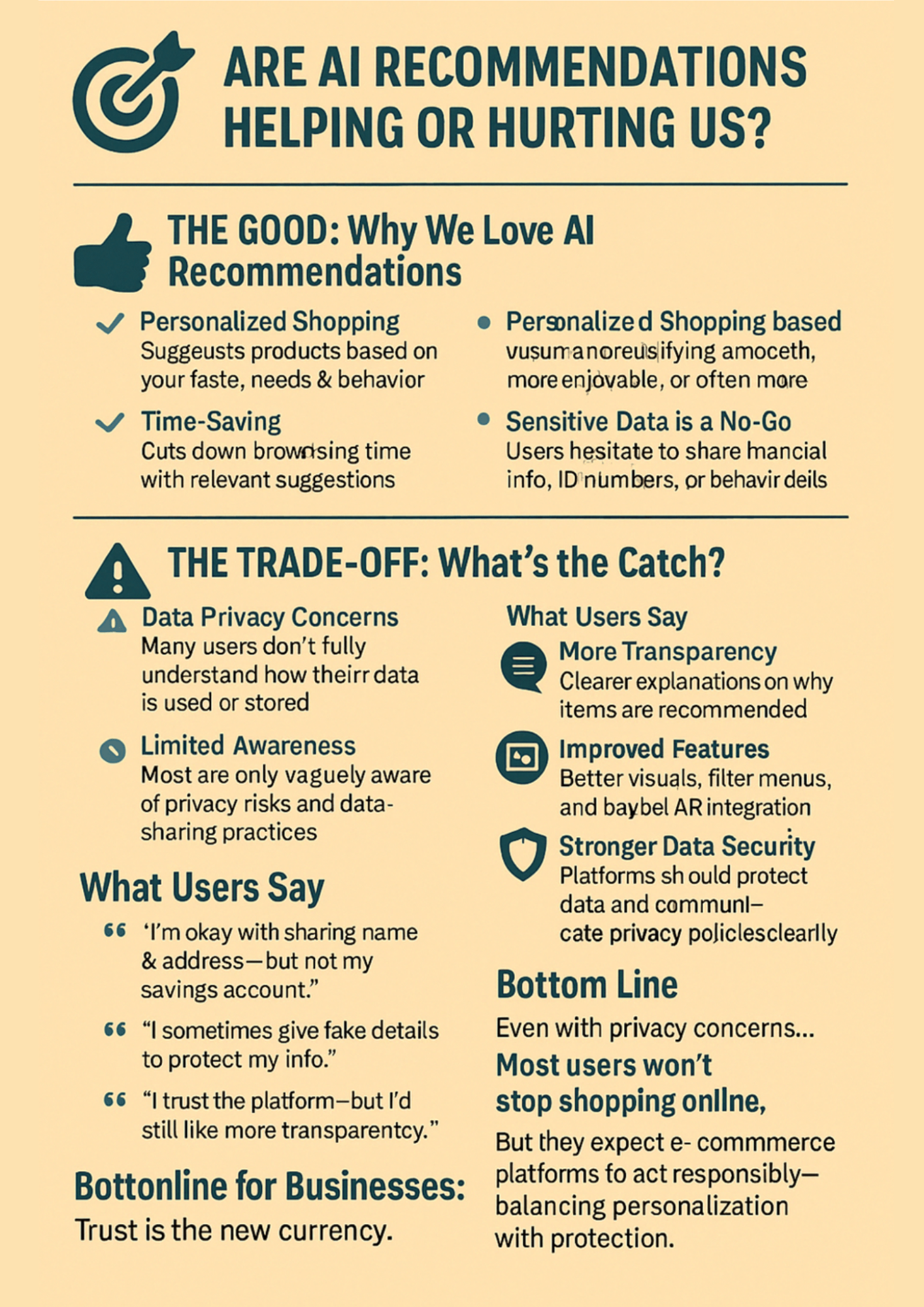
- Awareness is low. Most users know their data is being tracked, but few understand the extent. “I assume they see my searches, but I don’t know who else gets that info,” admits one shopper.
- Some data feels too personal. Shoppers are comfortable sharing basics like their name, address, and email. But when it comes to payment details, location history, or ID numbers? That’s where trust drops. Some even admit to entering fake details to protect themselves.
- The “necessary evil” mindset. Despite concerns, few are willing to quit online shopping. Instead, they limit exposure—sticking to trusted platforms, avoiding unnecessary permissions, and hoping companies won’t misuse their data.
Can We Have Both—Convenience and Privacy?
Shoppers aren’t asking for much: transparency, control, and security.
- “Tell me why I’m seeing this.” Users want to understand how recommendations work. Was this suggestion based on their last purchase? Their friend’s activity? A paid promotion?
- Better privacy policies. Let’s be honest—nobody reads those lengthy terms. Simplified, jargon-free explanations would help.
- More user control. Options to adjust data-sharing settings or delete stored history could ease privacy fears.
- Innovations that add value. Features like AR try-ons or smarter filters could make recommendations even more useful—without needing excessive data.
The Choice Is Yours: Smart Shopping in the Age of AI
AI shopping assistants aren’t going anywhere – they’re only getting smarter. While we enjoy the convenience of perfectly timed recommendations, we’re all part of an ongoing experiment in digital commerce. The real power lies in understanding how these systems work and making conscious choices about our participation.
Do you embrace the personalized experience wholeheartedly? Do you set strict boundaries? Or do you, like many shoppers, navigate a middle path – enjoying the benefits while trying to minimize your digital footprint?
As these technologies evolve, so must our approach to using them. The most savvy shoppers won’t just be those who find the best deals, but those who understand exactly what they’re exchanging for that perfect product recommendation.
Looking Ahead
The future of online shopping promises even more sophisticated personalization, with AI potentially predicting needs we haven’t even recognized yet. But this future only works if companies prioritize ethical data practices and if consumers stay informed about their digital rights.
One thing’s certain: in the dance between convenience and privacy, we all need to decide when to lead and when to follow. The question isn’t just “What do I want to buy today?” but “What kind of shopping experience do I want to create for myself?”
Comments :