2025 ICOSBE: Writing A Great Book Chapter
The 2nd International Conference on Sustainable Business and Entrepreneurship (ICOSBE)
BINUS Joint International Conference (BJIC)
Creativepreneurship Program, BINUS Bandung, Paskal Hypersquare, West Java, Indonesia
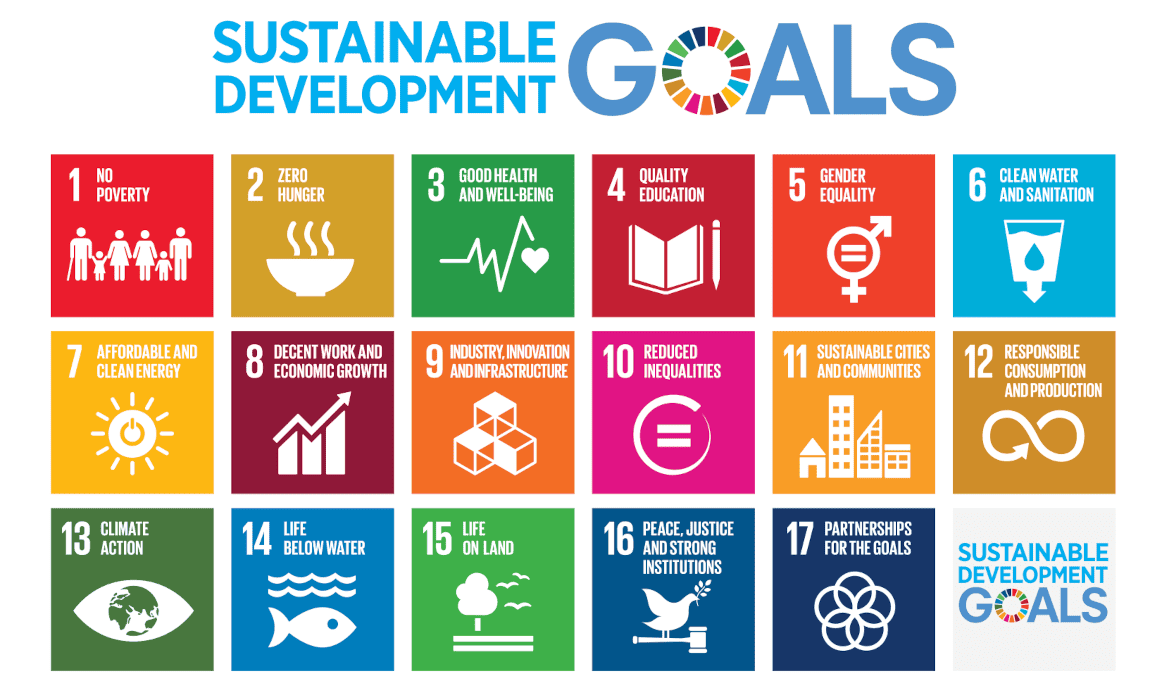
CONFERENCE SCOPE: As stated earlier on the main homepage, authors MUST submit manuscripts that address issues related to sustainable business and entrepreneurship (SBE), the central theme of the conference (Harnessing Entrepreneurship and Technology for Sustainable Development Goals), one of the eight designated conference tracks, or any of the 17 United Nations Sustainable Development Goals (SDGs) listed at https://sdgs.un.org/goals. Authors are advised to mention one of these issues (including SDG number) in their abstract, keywords, introduction, conclusion, or other relevant sections, as strong alignment with these areas will be viewed positively by the committee.
The conference organizer will reject out-of-scope manuscripts.
VERY IMPORTANT: At this point, the conference committee has received many manuscripts written only by authors from Indonesia. To support international collaboration and the exchange of ideas, manuscripts that include at least one co-author from an institution outside Indonesia will receive additional attention from the committee.
Please note that this is a business, management, and entrepreneurship-focused conference. Submissions that are purely based on science, technology, engineering, mathematics, arts, or other non-business, non-management, or non-entrepreneurship fields will not be accepted.
To help authors prepare suitable manuscripts for submission, the following paragraphs outline the recommended structure and focus areas for the book chapter or manuscript.
A well-structured manuscript generally contains five main parts: (1) Introduction, (2) Literature Review, (3) Research Methodology, (4) Results and Discussion, and (5) Conclusion. While each part plays an important role, IGI reviewers usually pay special attention to the Introduction and Conclusion, as these sections show the study’s purpose, originality, and overall contribution to the field.
The Introduction (Part 1) should include the research background, explaining why the topic is important and relevant. It should also provide a short and focused review of previous studies, highlighting what is already known and what is still uncertain, debated, or unexplored. Authors should identify the research gaps and limitations, followed by a clear statement of the research aim, objectives, research questions, and the study’s novelty.
The research aim presents a broad statement of the study’s overall goal, while the research objectives break this aim into specific, measurable steps. These objectives help guide the design, data collection, and analysis, serving as a roadmap for the study.
The Introduction should also explain the expected theoretical and managerial contributions of the study. This section usually follows a “funnel approach,” starting with a general discussion of the topic, then narrowing down to a specific research gap, and ending with the study’s objectives and contributions.
The Literature Review (Part 2) may vary depending on the discipline. For management manuscripts that use a Likert-scale survey, it should include discussions of grand theory, middle-range theory, and practical or operational-level theory, along with clear explanations of each variable or construct. It should also present the hypotheses, their theoretical justifications, and the proposed research model.
A good literature review does more than summarize previous studies. It should analyze and compare prior research, identify inconsistencies or gaps, and point out areas that need further study. This analysis should lead naturally to the research objectives and show how the current study adds new knowledge to theory and practice.
The Research Methodology (Part 3) in a business manuscript using a Likert-scale survey should describe the research population, sampling method, minimum sample size, and sources for the measurement instruments or survey indicators. It should also justify the analytical tools used, such as SmartPLS, and discuss aspects of reliability and validity, including acceptable threshold values like the Heterotrait–Monotrait Ratio of Correlations (HTMT). The methodology must provide a clear and detailed description of the research design, data collection, and analysis procedures, including ethical considerations, to ensure that the study is valid, reliable, and can be replicated by other researchers.
The Results and Discussion (Part 4) should be organized clearly to maintain objectivity and depth of analysis. The Results section should present the findings using text, tables, and figures without interpretation. The Discussion section should then interpret the results, link them to existing literature, and highlight theoretical and practical implications.
A common mistake that can lead to rejection is mixing these two sections—for example, interpreting results in the Results section or repeating findings in the Discussion section without proper analysis.
The Conclusion (Part 5) should restate the purpose of the study and summarize its main findings, showing how they answer the research objectives. It should also explain the relevance of the study to existing literature and real-world applications. The Conclusion must highlight the originality and contribution of the study, acknowledge its limitations, and suggest directions for future research. This section should end with a strong closing statement that reinforces the significance and impact of the study.